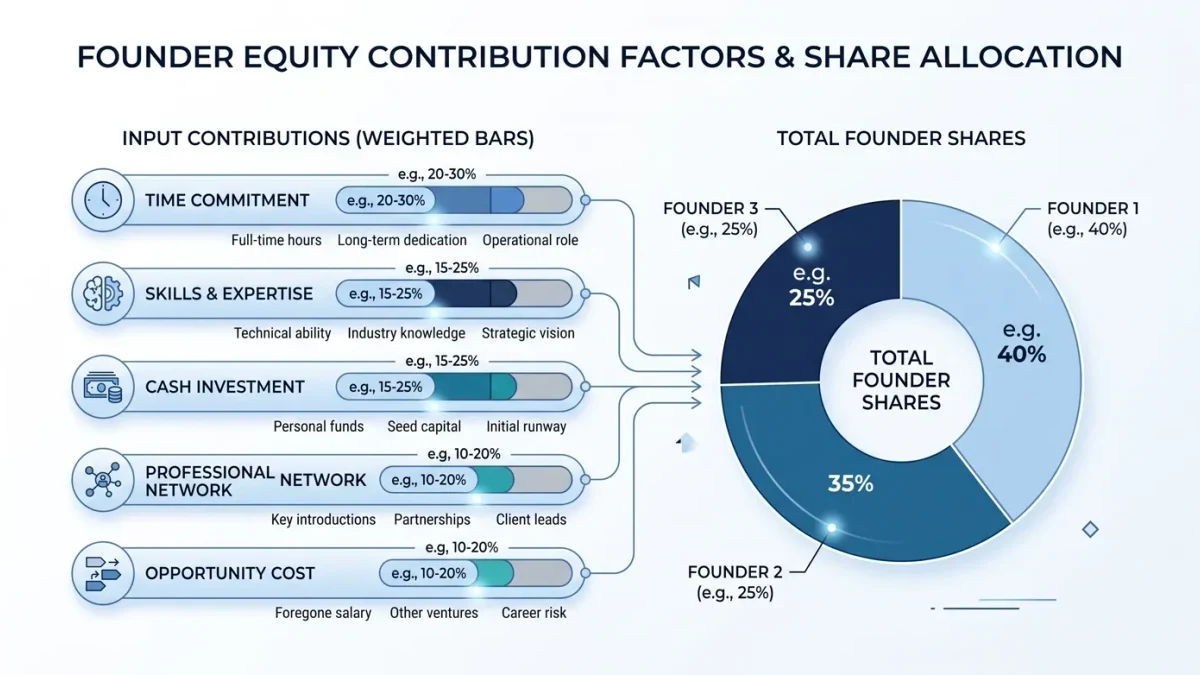

Founding-team equity negotiations are usually discussed as percentages — how much of the company — while the value actually lives in the terms underneath: the vesting schedule, the strike price, the preference stack above the shares, and the rights that decide what the percentage pays in each exit scenario. A founder joining with 10 percent on clean terms is richer than one with 15 percent beneath a heavy stack on a bad schedule. This is the checklist of what to ask before signing; it is not legal advice, and counsel is worth the fee. Honey Badgers publishes information, not professional advice.
What should you ask about vesting first?
Everything. The questions: does your vesting start at signing or at the next financing (credit for time served matters when you are joining something that already exists); is the cliff survivable — a one-year cliff on a late founding role is a bet on a relationship you have not tested; what happens on termination without cause — does unvested equity survive a dismissal, and is there acceleration; and crucially, are the founders' schedules the same as yours. A team where the existing founders are fully or mostly vested while the new founder vests from zero is not a partnership, it is employment with equity flavor. The fair structures are documented and common: identical four-year schedules with negotiated time-served credit.
What should you ask about the instrument itself?
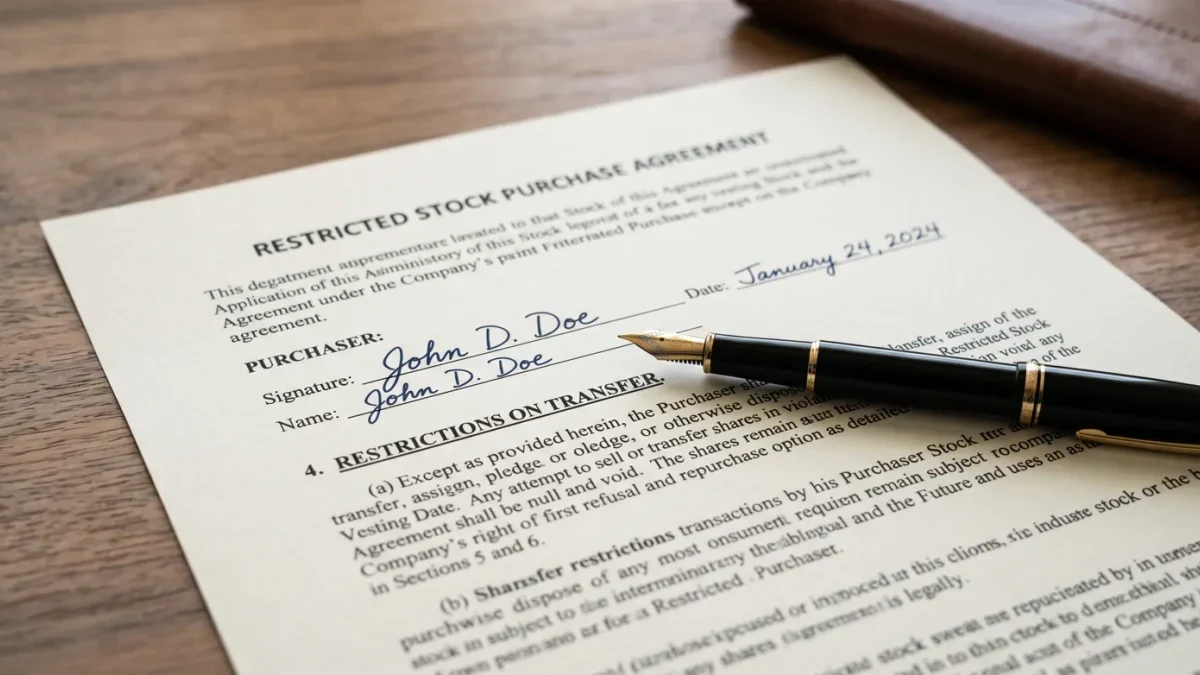
Restricted stock or options — and the details of each. Restricted stock at formation: file the 83(b) within 30 days or face tax on every vesting tranche at appreciated value; this is the single most expensive missed deadline in founder finance. Options: what is the strike (the current 409A), and does the grant include early-exercise provisions. And the class: are you getting common or the same preferred the investors hold — rare for founders, but the honest question if you are bringing the IP or the money. The paperwork question that reveals the company: does a shareholders' agreement exist, with transfer restrictions and ROFRs, and has anyone shown it to you before you asked twice.
What should you model before saying yes?
The exit waterfall, at least three scenarios. The inputs you need: the total preference stack over common (how many dollars exit the deal before your shares pay), the option pool's size and whether the next round's pool is created pre-money (which dilutes you specifically), and the dilution path implied by the fundraising plan — a company two rounds from Series A will roughly halve your percentage before any exit. The model's output is the real compensation: at a $100 million sale, a $300 million sale, a $1 billion sale, what do your shares pay. Companies that will not share the preference stack with a prospective founding team member are telling you what the stack looks like.
What role and title questions matter?
Equity follows role permanence, and the documented disputes cluster where title and equity diverge. If you are called a co-founder, is the cap table consistent with the word — founder-level equity, founder-level vesting, founder-level information rights (board observer status, monthly financials)? If you are a founding executive, is the equity executive-tier or founder-tier, and is the distinction honest? The pattern to negotiate against: co-founder on the website, first employee on the paperwork — the status is marketing, the cap table is fact. Also worth negotiating explicitly: what happens to role and equity if a professional CEO is hired — the documented trigger for founding-team disputes more than any other event.
What are the red flags in the negotiation itself?
Documented signals that predict trouble: percentages discussed but documents withheld until 'after you commit'; vesting terms described as 'standard' without a schedule in writing; the existing founders' equity and vesting treated as confidential while yours is negotiable; pressure to sign quickly combined with any disparagement of the value of lawyers; and a prior founder's departure with an unexplained equity outcome sitting in the company's history. Each is survivable alone; together they describe a team that negotiates with future team members the way it has negotiated with past ones.
What is the honest negotiation posture?
Ask for the documents, model the outcomes, and negotiate the terms that move value — vesting credit, acceleration, the stack's disclosure — before the percentage, which is the least informative number on the page. A team that engages transparently on these questions is demonstrating the operating culture you are joining; the negotiation is the first board meeting, and both sides are showing their work.
Equity is a bet on terms, and the terms are all negotiable until signed. The founders who ask the uncomfortable questions before signing are the ones not litigating them after.