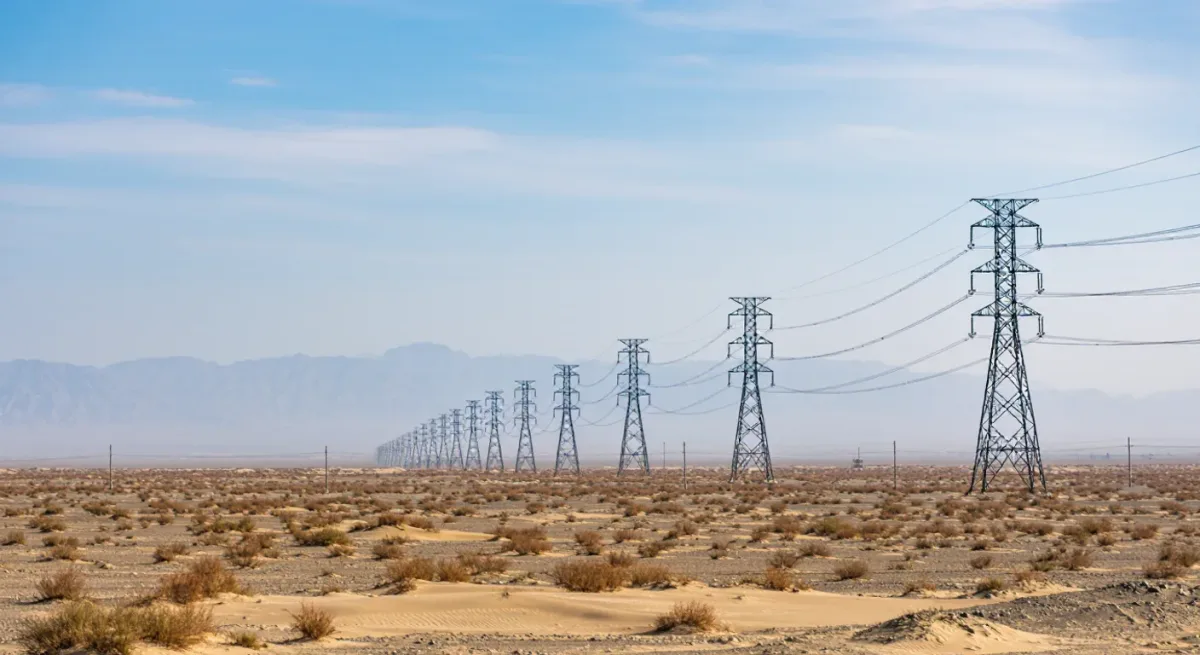
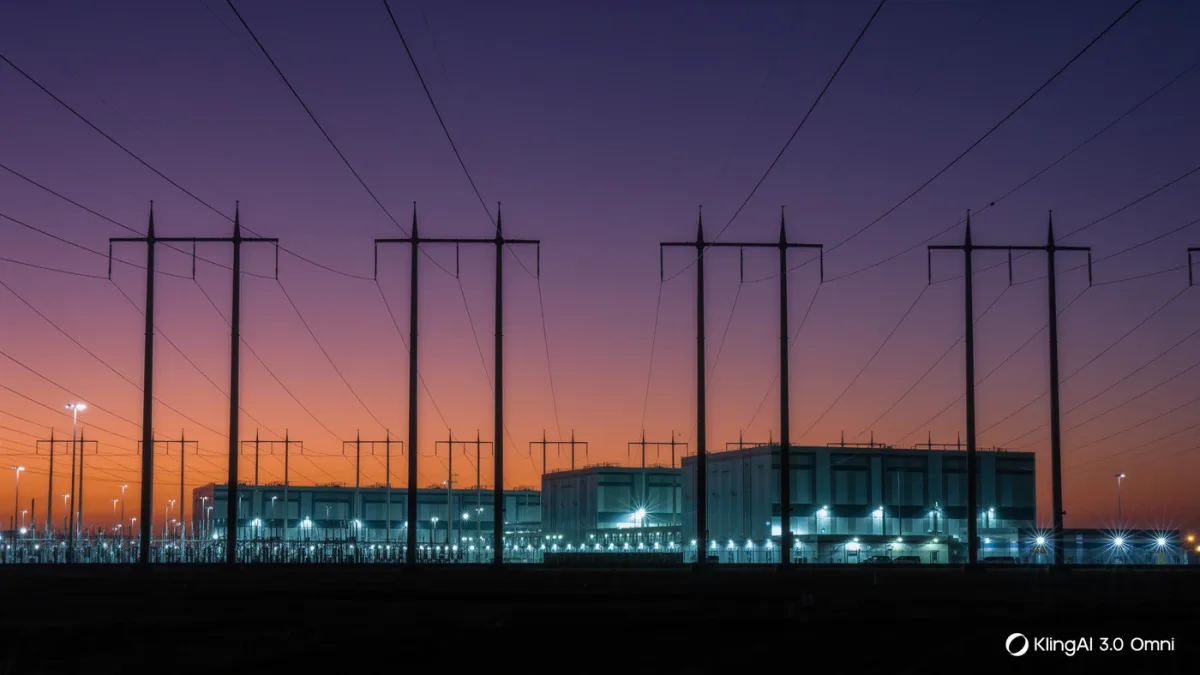
The AI infrastructure boom ran into physics in 2025: the constraint on compute growth stopped being chip supply and became electricity. The documented markers: hyperscaler and lab capital plans for datacenters running to hundreds of billions annually — Stargate's announced $500 billion multi-year commitment among them — while individual campuses grew from tens of megawatts to gigawatt-scale proposals; U.S. datacenter power demand, roughly 4 percent of electricity consumed around 2023, projected by grid planners and consultancies toward 8-12 percent by the late 2020s; and interconnection queues in key regions stretching five years and beyond. The wall is real, scheduled, and printed in utility filings.
What is the documented scale of the problem?
The numbers on the record. Demand: grid-operator forecasts — PJM and peers, whose planning documents are public — show datacenter load growth accelerating through the decade, with individual campuses requesting hundreds of megawatts to over a gigawatt, comparable to small cities. Supply: new generation takes years — gas plants five-plus, nuclear far longer, and the fastest large-scale additions being renewables plus storage with their own interconnection constraints; the documented responses include restarting retired nuclear units (Three Mile Island's restart under a Microsoft power agreement, announced 2024) and keeping coal plants scheduled for retirement alive. Transmission: the queue bottleneck — projects waiting years for grid connection, with large loads increasingly told to bring their own generation or wait. The arithmetic underneath: a single frontier training cluster can draw hundreds of megawatts continuously, and the 2026-generation campuses are planned at multiples of that.
Who is absorbing the constraint first?
The documented distribution of pain. The hyperscalers and labs: committing to gigawatt sites with attached generation deals — Microsoft's nuclear agreement, Amazon's and Google's investments in nuclear and geothermal, Meta's multi-state campus siting — because at their scale, power procurement is a competitive weapon. The GPU clouds: the 2024-2025 generation of compute providers learned that contracts without firm power are marketing — the documented financing discipline shifted to power-first siting. The mid-market: startups and enterprises without gigawatt balance sheets discover that their inference growth lands in regions where the queue is years long, and the pricing follows: electricity costs in constrained grids have risen for all consumers, with datacenter-driven rate-increase requests now a recurring item in utility dockets — the political friction the industry has begun to feel. And the jurisdictions: the siting fights — local moratoria, community opposition, water-use disputes — are now part of every campus announcement's risk factors.
Where is the startup opportunity at the power layer?
The documented formation of a market. Generation and firming: small modular reactor developers (Oklo, X-energy, Kairos and peers) signing preliminary agreements with datacenter buyers — the technology still pre-deployment at commercial scale, the corporate commitments real; gas-turbine and behind-the-meter generation providers, whose order books filled through 2025. Efficiency: the software layer — scheduling, load-shifting, and workload placement that cuts cost per kilowatt-hour; the cooling innovation market, liquid cooling displacing air as rack densities pass air's limits; and chip-efficiency work, whose economic value rises directly with power prices. Grid and interconnection: the tooling market — queue optimization, grid modeling, power procurement software — serving both datacenter developers and utilities. And siting/navigation: the consultants and platforms de-risking land, power, and permitting — unglamorous, and by the deal-flow record, in demand. The pattern: every gigawatt of AI compute creates a power-layer supply chain, and the 2025 record shows the capital arriving there.
What are the honest uncertainties?
The record's open questions. Demand durability: the buildout's scale assumes AI revenue keeps compounding — if model economics disappoint, the power plans (and the long-lead contracts behind them) reprice; the utilities' own filings note both directions. Technology: SMRs remain pre-commercial, advanced cooling is scaling but new, and the efficiency frontier — cost per token falling as models improve — could flatten demand growth from the other side. Policy: permitting reform is proposed everywhere and enacted slowly; the friction between state siting politics and federal ambition is unresolved. And timing: the wall's arrival is regional — some grids absorb the growth, others hit binding constraints years earlier — so the honest forecast is not a single wall but a series of local ones, arriving on utility schedules rather than industry narratives.
The chip shortage ended because fabs got built; the power shortage ends on slower physics — generation, transmission, and politics. For the AI economy this is the decade's infrastructural race under the race, and the startups positioned at the power layer are, for once, selling to a buyer whose need is contractual and whose constraint is physical.