
Palantir Technologies, the data-analytics company founded in 2003 by Peter Thiel and Alex Karp, became the public market's reference case for AI software value: listed via direct listing in September 2020 at a valuation near $15 billion that many analysts called rich, it compounded through 2024-2025 into the most valuable software company by market capitalization — a run that made its filings the most-read documents in software.
What do the filed numbers show?
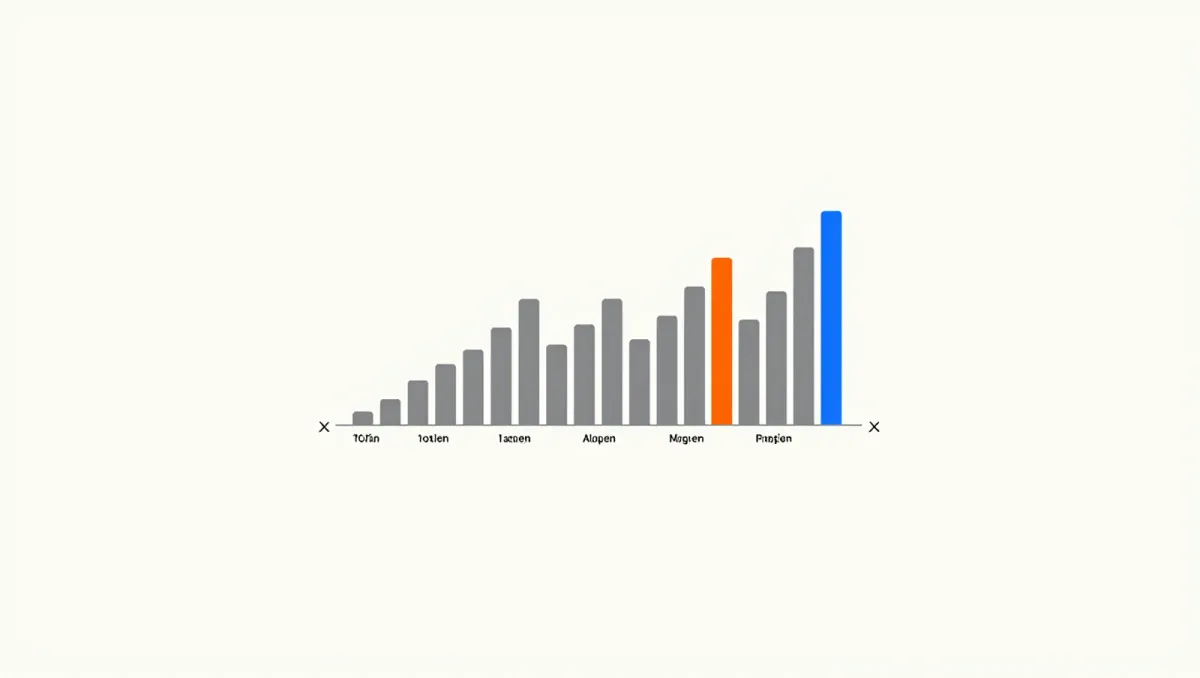
The documented trajectory from Palantir's SEC filings: fiscal 2024 revenue of $2.87 billion, up 29 percent — accelerating from mid-teens growth in 2023; U.S. commercial revenue growing dramatically faster, with quarterly U.S. commercial growth reaching 70-90 percent year over year through 2025's reported quarters; customer counts rising steeply in the U.S. commercial segment; and GAAP profitability arriving in 2023 and holding — the company's first sustained profits after two decades. The 2025 acceleration: reported quarterly revenue growth in the 40-60 percent range, with full-year guidance rising repeatedly, per its filings and earnings reports. Government remained roughly half the business — defense and intelligence contracts deepening, including roles in the U.S. military's AI programs — while the commercial acceleration did the multiple's work.
What drove the re-rating?
Three documented drivers. The AIP product: Palantir's Artificial Intelligence Platform — bootcamps that land AI use cases on enterprise data in days — became the company's growth engine, converting the 2023-2025 enterprise AI demand wave into contracted revenue at a pace competitors did not match. The scarcity trade: as the market sought pure AI-software exposure, Palantir was one of the few companies with visible, filed, accelerating AI-driven revenue — scarcity pricing applied to a liquid large cap, which is how a software company came to trade at a market-leading price-to-sales multiple far above every software comparable. And the founder-led narrative: Karp's letters and positioning made the stock a proxy for the AI-and-national-security thesis, attracting a retail base unusual for enterprise software.
What are the documented caveats?
An honest review prints them. Valuation: the multiple — for most of 2025, well above 60 times forward revenue, against software comparables in the single digits to low teens — prices years of hypergrowth continuing without interruption; the filing-disclosed risks (concentration in government contracts, competition from hyperscalers and AI-native entrants) are unchanged by the multiple, but the downside arithmetic is not. Customer concentration: government revenue remains roughly half the business, subject to appropriations cycles. The bootcamp economics' durability: the documented acceleration is real; whether the land-and-expand pattern sustains at scale beyond the early adopter wave is the question the 2026 filings began answering. And the 'AI revenue' definitional question — Palantir sells data infrastructure that AI makes more valuable, which is the durable position, but bears note that it is not a model company and its economics do not depend on frontier capability directly.
What does the record mean for the AI software market?
Palantir's filings became the sector's proof case on three propositions: that enterprise AI budgets land on infrastructure that owns the customer's data gravity, not on models; that distribution-plus-bootcamp selling converts the AI wave faster than product-led growth does; and that public markets pay scarcity premiums for filed, accelerating AI revenue — the pattern every private AI infrastructure company (Databricks most prominently) invokes in its own positioning. The record also documents the sector's cautionary symmetry: much of the software industry's 2024-2025 multiple compression happened while Palantir's expanded — the market was not paying more for software; it was concentrating its payment on the one company with the numbers.
The verdict the evidence supports: a genuine, filed, accelerating growth record — the strongest documented commercial proof of enterprise AI monetization — priced at a multiple that assumes the acceleration compounds for years. Both halves of that sentence are true, and honest analysis stops between them.