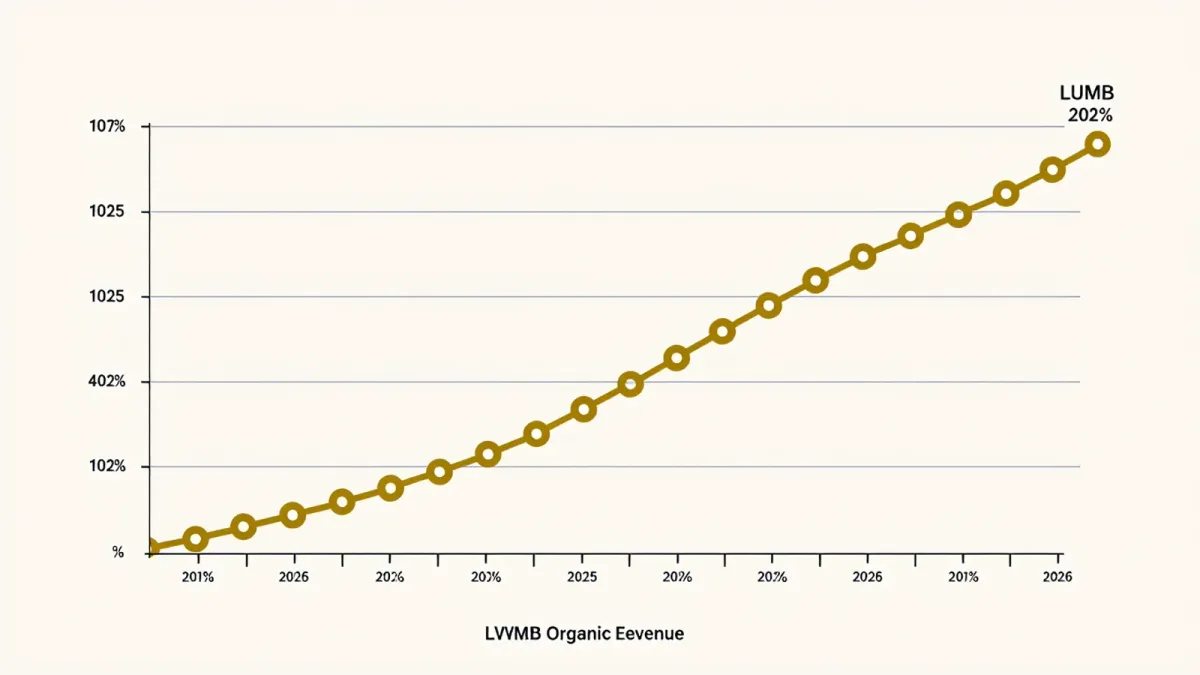

Stripe, the payments infrastructure company, raised $4.5 billion in June 2025 at a $91.5 billion post-money valuation led by Sequoia, Andreessen Horowitz, and Bond — up from a $70 billion mark used in its March 2025 employee secondary, and up sharply from the $50 billion at which the same investor group recapitalized the company in March 2023, per Reuters and company statements. This is an evidence-bounded review of the growth record between those two numbers. Stripe is private; nothing below is audited or filed, and none of it is investment advice.
What does the documented growth show?
Company-reported figures carry the analysis. Total payment volume: $1 trillion in 2023, reported as a milestone that took 14 years to reach, with roughly 25 percent growth rates claimed into 2024-2025. Revenue: reported above $2.4 billion gross for 2024, growing faster than volume — the pattern of a company whose pricing power and product mix, not just checkout growth, is expanding. Profitability: the company stated it was profitable on an adjusted EBITDA basis in 2023 and 2024, and said its first GAAP-profitable year arrived with 2024 results — a claim impossible to verify externally but consistent with the round's pricing momentum.
What drove the re-rating from $50 billion to $91.5 billion?
Three documented vectors. First, the AI commerce wave: Stripe's revenue from AI-native companies — model API billing, agent checkout, usage-based subscriptions — was reported to be a fast-growing share, with the company saying AI companies accounted for a meaningful double-digit percentage of new billing volume. Second, stablecoin payments: Stripe acquired Bridge, the stablecoin infrastructure startup, in a deal reported at $1.1 billion in late 2024, and launched stablecoin-powered payouts and acceptance through 2025 — an early position in the rails the GENIUS Act legitimized in July 2025. Third, the IPO pipeline story: reporting through 2025 consistently described Stripe as the largest prospective public listing in fintech, with the June round explicitly framed by the company as providing employee liquidity and balance-sheet flexibility ahead of a potential listing.
Where is the record thinner than the narrative?
The honest gaps. Take rates and margin structure are not disclosed, so Stripe's claim that growth compounds faster than costs cannot be checked. The 2023 recapitalization — a down round from its $95 billion 2021 peak — shows how fast private marks can move; the 2025 re-rating is the same volatility in the flattering direction. Competition is documented and real: Adyen, the Amsterdam-listed rival, publishes quarterly volumes and digital revenue growth in the mid-twenties of percent, meaning investors can price Stripe only against a competitor that discloses more. And the crypto-heavy Bridge contribution remains unquantified — a $1.1 billion acquisition whose revenue contribution Stripe has never broken out.
How does Stripe compare with Adyen on the record?
Only one side of this comparison files public accounts. Adyen's published figures show low-twenty-percent digital revenue growth and steady EBITDA margins near 50 percent on a much smaller revenue base. Stripe reports faster growth, a larger volume base, a broader product surface — billing, fraud (Radar), issuing, Atlas — and, since the Bridge deal, stablecoin rails Adyen lacks. On the disclosed record, Stripe is bigger and growing faster; Adyen is more transparent and, on its own numbers, exceptionally profitable. A buyer of the Stripe growth story is paying for the undisclosed middle of that comparison.
What would an IPO actually disclose?
A Stripe S-1 would settle the questions this review cannot: take-rate trend, net revenue retention, the Bridge contribution, GAAP profitability, and the co-founders' Patrick and John Collison control structure. Every reporting thread through 2025 points toward a listing being prepared; no date exists on the record. Until then, the company's own summary — trillion-dollar volumes, claimed GAAP profitability, and the largest fintech IPO pipeline position — is the most supportable reading, with the margin interior left to trust.
The verdict the evidence supports: a genuine re-acceleration from the 2023 trough, priced at $91.5 billion on unaudited but internally consistent company reporting. The bull case is documented. The unit economics remain Stripe's private information.