A lockup agreement is a contractual promise, signed at IPO, that insiders — founders, employees, and pre-IPO investors — will not sell their shares for a set period, standardly 180 days from the listing. When the lockup expires, shares that were legally frozen become sellable, often instantly doubling or tripling the tradable float. The event is scheduled, public, and known to every participant — and it still moves stocks, because it converts a known future supply into present selling.
What is actually in a lockup agreement?
The standard terms: a 180-day lock for company insiders and pre-IPO holders; earlier release triggers, increasingly common, that free some or all shares if the stock trades above a threshold (typically 120-130 percent of the IPO price) for a set window after earnings; and staged releases for early investors in some deals. Underwriters want the lockup — unrestricted insider selling in month one would break the aftermarket they stabilized — and companies accept it because underwriters price certainty. The document is boilerplate; its calendar consequences are not.
What does the documented pattern around expiry look like?
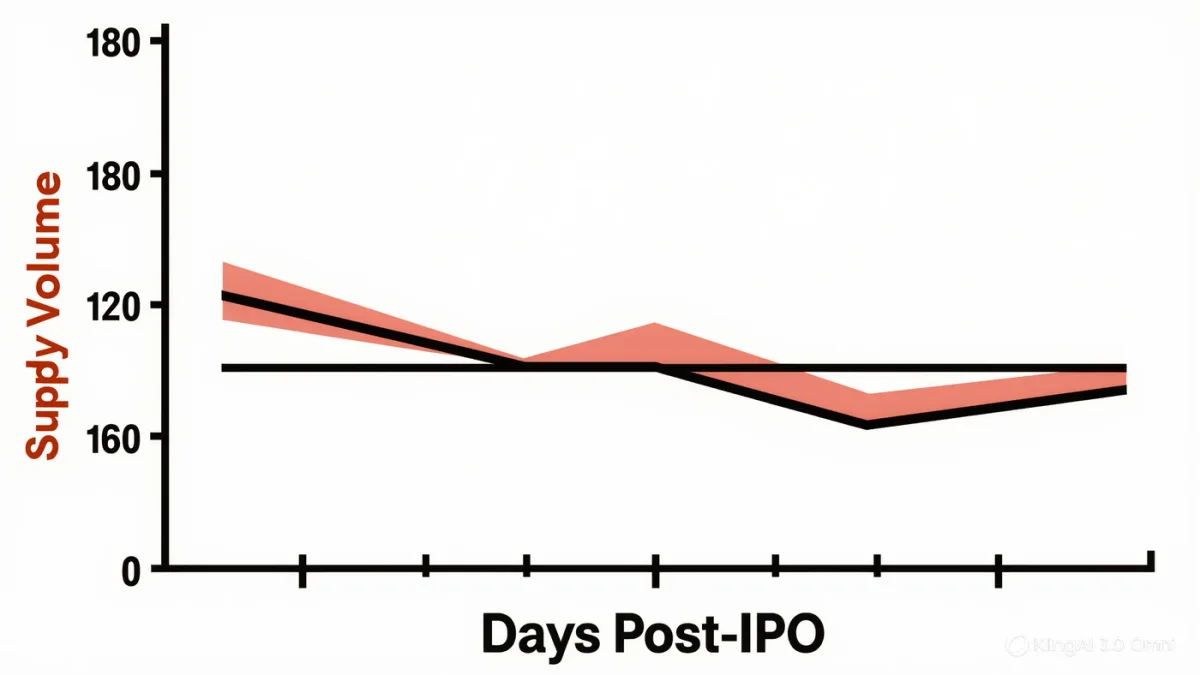
The academic and market record, consistent across decades of studies: lockup expirations are associated with abnormal trading volume — several times normal — and modest average negative returns in the surrounding weeks, with the drift beginning before the date as markets anticipate. The average effect is small; the variance is enormous. The determining variables, per the same literature: how much insider equity is unlocking relative to float, whether the stock is above or below the IPO price, and — the dominant factor — whether the company's post-IPO fundamentals gave insiders a reason to hold. Expired lockups on well-performing stocks routinely pass without damage; lockups on broken stocks cluster with the selling everyone expects.
Why do companies stage or release lockups early?
The 2021 vintage innovated aggressively, and the record explains why: with hundreds of IPOs competing for attention, companies used early-release triggers to reward employees locked out of liquidity while prices ran, and to defuse the day-180 cliff by spreading sales. The documented failures of the same era cut the other way — releases that dumped supply into weak aftermarkets accelerated declines, and several companies that waived lockups in 2021 watched their stocks never recover. The lesson the market drew: staged releases are a tool for strong aftermarkets, not a rescue for weak ones.
What happened at recent expirations of note?
The 2025 class provided the test cases. The consistent documented pattern across the reopened window's big listings — including the fintech and crypto debuts: elevated volume at expiry, pressured prices in the weeks around it for stocks trading below their offer, and non-events for the winners. The largest structural factor, documented in deal documents for every recent listing: IPO floats remain small — often under 15 percent of shares outstanding — so the expiry can release several multiples of the float at once. Small float flattered the debut; the same small float concentrates the expiry risk. The two events are the same mechanism read twice.
What should founders and employees plan for?
Founders: negotiate lockup terms at IPO with the same care as pricing — staged releases, employee carve-outs for tax obligations, and communication planning for the expiry week, because a silent calendar date becomes a narrative event when the volume spikes. Employees: the honest planning frame is that lockup expiry is when your options become spendable, and the documented pattern — supply pressure into the date — argues for a pre-decided selling plan rather than a week-of decision made while watching the tape. Both should remember what the data shows: the expiry amplifies the underlying story; it does not write a new one.
Day 180 is the IPO's second act: the day the market learns whether the people who know the company best are buyers of the story they sold. The calendar prints the date months ahead — which is exactly why the drift starts early and the preparation should too.